#include <WsfEW_XmtrComponent.hpp>
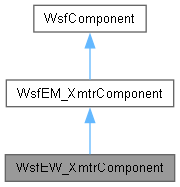
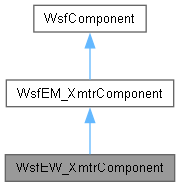
Public Member Functions | |
| WsfEW_XmtrComponent () | |
| WsfEW_XmtrComponent (const WsfEW_XmtrComponent &aSrc) | |
| WsfEW_XmtrComponent & | operator= (const WsfEW_XmtrComponent &)=delete |
| ~WsfEW_XmtrComponent () override | |
| Public Member Functions inherited from WsfComponentT< WsfEM_Xmtr > | |
| WsfComponentT () | |
| WsfComponentT (const WsfComponentT &) noexcept | |
| WsfComponentT & | operator= (const WsfComponentT &) noexcept |
| ~WsfComponentT () override=default | |
| virtual void | ComponentParentChanged (ParentType *aParentPtr) |
| ParentType * | GetComponentParent () const |
| void | SetComponentParent (ParentType *aParentPtr) |
| Public Member Functions inherited from WsfComponent | |
| virtual | ~WsfComponent ()=default |
| virtual int | GetComponentInitializationOrder () const |
| template<typename T> | |
| bool | QueryInterfaceT (T *&aRolePtr) |
| bool | ComponentHasRole (int aRole) |
| Returns true if the component has the specified role. | |
| virtual bool | PreInitialize (double aSimTime) |
| virtual bool | Initialize2 (double aSimTime) |
| virtual void | PreInput () |
| virtual bool | ProcessInput (UtInput &aInput) |
Static Public Member Functions | |
| static WsfEW_XmtrComponent * | Find (const WsfEM_Xmtr &aXmtr) |
| Find the electronic warfare receiver component for the specified receiver. | |
| static WsfEW_XmtrComponent * | FindOrCreate (WsfEM_Xmtr &aXmtr) |
Common infrastructure methods. | |
| bool | Initialize (double aSimTime) override |
| WsfEW_EA_EP * | GetElectronicAttack () const |
| EW-specific transmitter methods. | |
| void | SetElectronicAttack (WsfEW_EA_EP *aElectronicAttackPtr) |
Component infrastructure methods. | |
| WsfStringId | GetComponentName () const override |
| WsfComponent * | CloneComponent () const override |
| const int * | GetComponentRoles () const override |
| void * | QueryInterface (int aRole) override |
Additional Inherited Members | |
| Public Types inherited from WsfComponentT< WsfEM_Xmtr > | |
| typedef WsfEM_Xmtr | ParentType |
| This is needed to support the WsfComponentList template. | |
Constructor & Destructor Documentation
◆ WsfEW_XmtrComponent() [1/2]
| WsfEW_XmtrComponent::WsfEW_XmtrComponent | ( | ) |
Referenced by CloneComponent(), Find(), FindOrCreate(), operator=(), and WsfEW_XmtrComponent().
◆ WsfEW_XmtrComponent() [2/2]
| WsfEW_XmtrComponent::WsfEW_XmtrComponent | ( | const WsfEW_XmtrComponent & | aSrc | ) |
References WsfEW_XmtrComponent().
◆ ~WsfEW_XmtrComponent()
|
override |
Member Function Documentation
◆ CloneComponent()
|
overridevirtual |
Clones a component. May return null if component does not support clone.
Implements WsfComponent.
References WsfEW_XmtrComponent().
◆ Find()
|
static |
Find the electronic warfare receiver component for the specified receiver.
References WsfComponentList::FindByRole(), WsfEM_Xmtr::GetComponents(), and WsfEW_XmtrComponent().
Referenced by FindOrCreate(), and WsfEW_EA::GetElectronicAttack().
◆ FindOrCreate()
|
static |
Find the electronic warfare receiver component for the specified receiver. If the component does not exist then it will be created.
References WsfComponentListT< COMPONENT_TYPE >::AddComponent(), Find(), WsfEM_Xmtr::GetComponents(), and WsfEW_XmtrComponent().
Referenced by WsfEW_EA::SetElectronicAttack().
◆ GetComponentName()
|
overridevirtual |
Returns the component's name. Each component in a component list has a unique name. Names are usually defined by the user, but they may also be generated by code and prefixed with a '#' to guarantee no collisions with user-defined names.
Implements WsfComponent.
◆ GetComponentRoles()
|
overridevirtual |
Returns a zero-terminated array of component roles. Note that the array should be in decreasing order of specificity and should generally the inheritance hierarchy. The first entry should be the components 'primary' role. For example a sensor would do the following:
Implements WsfComponent.
References cWSF_COMPONENT_EW_XMTR.
◆ GetElectronicAttack()
|
inline |
EW-specific transmitter methods.
Referenced by WsfEW_EA::GetElectronicAttack().
◆ Initialize()
|
overridevirtual |
Perform phase 1 initialization. This is called by WsfPlatform::Initialize() during phase 1 initialization of the platform. The component should complete validation of input data that could not be done by ProcessInput, as well as any other functions to prepare for simulation use (subject to the next paragraph).
The order in which components are initialized is defined by GetComponentInitializationOrder. In general a component implementation of this method should not be dependent on the state of another component, i.e.: it should not assume that the other components Initialize() method has been called. If such a dependency exists one should use Initialize2() if possible, or specify a value GetComponentInitializationOrder to force things to initialize in a particular order.
- Parameters
-
aSimTime The current simulation time.
- Returns
- true if successful or false if unsuccessful (bad input data, etc.)
- Note
- This method should NOT add any other components to the platform. This MUST be done in PreInitialize().
Reimplemented from WsfComponent.
References WsfComponentT< WsfEM_Xmtr >::GetComponentParent(), WsfEM_XmtrRcvr::GetSimulation(), and ok.
◆ operator=()
|
delete |
References WsfEW_XmtrComponent().
◆ QueryInterface()
|
overridevirtual |
Requests a component's role interface. A component can support one or more roles.
- Parameters
-
aRole The role whose interface is to be returned.
- Returns
- A pointer to the object if it supports the indicated role, or 'null' if it does not. Usage: WsfProcessor* procPtrOrNull = (WsfProcessor*)componentPtr->QueryComponentInterface(cWSF_COMPONENT_PROCESSOR);
Implements WsfComponent.
References cWSF_COMPONENT_EW_XMTR.
◆ SetElectronicAttack()
| void WsfEW_XmtrComponent::SetElectronicAttack | ( | WsfEW_EA_EP * | aElectronicAttackPtr | ) |
Set the Electronic Attack object for this receiver.
- Parameters
-
aElectronicAttackPtr Pointer to the new electronic attack object.
- Note
- Any existing electronic attack object is deleted.
Referenced by WsfEW_EA::SetElectronicAttack().
The documentation for this class was generated from the following files: