#include <WsfDefaultSensorTracker.hpp>
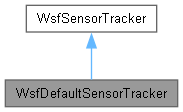
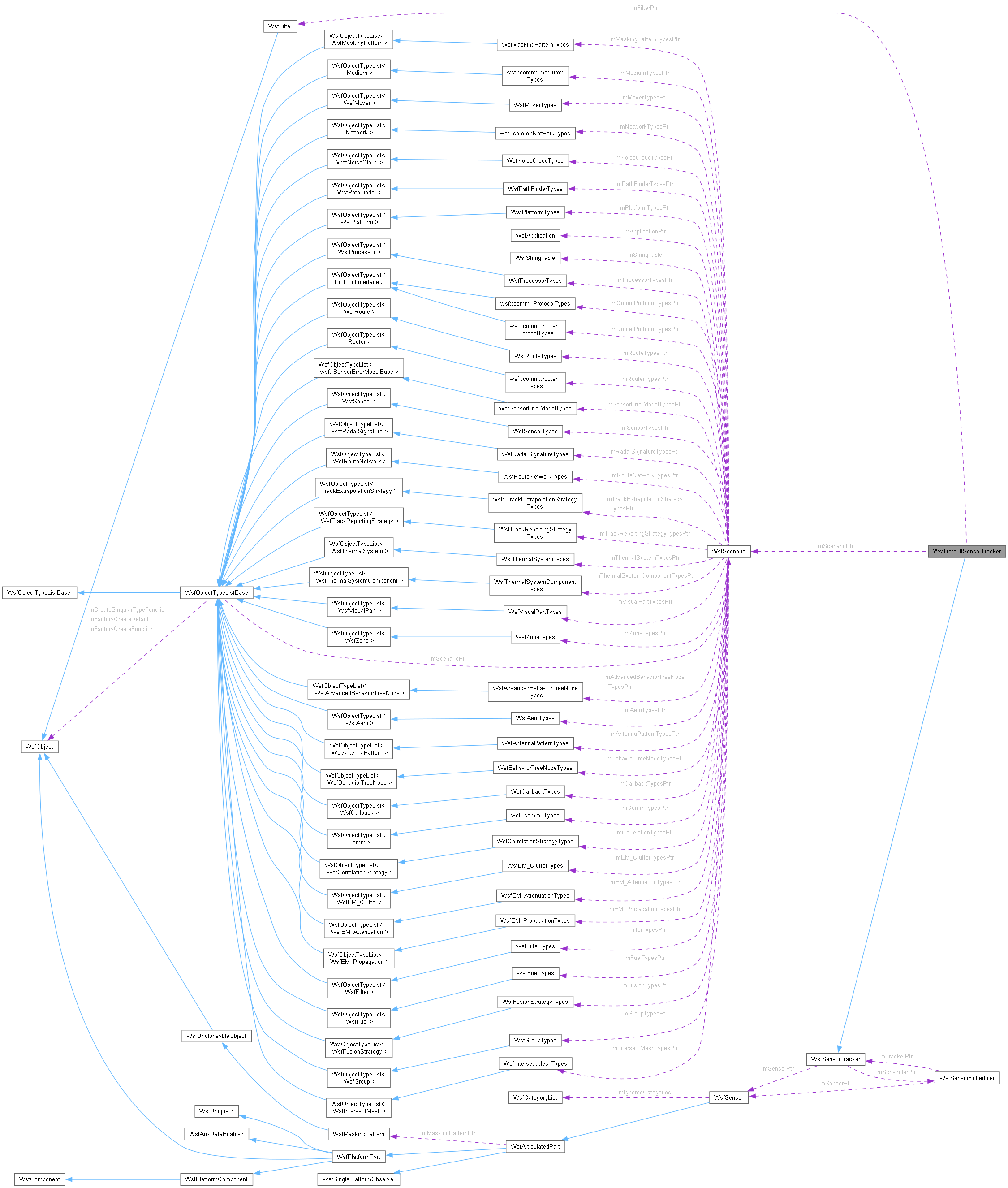
Classes | |
| class | State |
| Used to store state data about the interaction between a sensor and a target. More... | |
Public Member Functions | |
| WsfDefaultSensorTracker (WsfScenario &aScenario) | |
| ~WsfDefaultSensorTracker () override | |
| WsfSensorTracker * | Clone () const override |
| Clone this tracker. | |
| unsigned int | GetActiveTrackCount () const override |
| Return the number of tracks being maintained by the sensor. | |
| void | GetActiveTrackList (WsfTrackList &aActiveTrackList) override |
| Return the active tracks the sensor is maintaining. | |
| unsigned int | GetMaximumTrackCount () const override |
| Return the maximum number of tracks that can be maintained by the sensor. | |
| bool | GetTargetState (double aSimTime, const WsfTrackId &aRequestId, TargetState &aTargetState) override |
| void | GetRequestDataForTarget (size_t aObjectId, WsfTrackId &aRequestId, size_t &aModeIndex, WsfTrackId &aTrackId) const override |
| bool | Initialize (double aSimTime, WsfSensor *aSensorPtr, WsfSensorScheduler *aSchedulerPtr) override |
| bool | ProcessInput (UtInput &aInput) override |
| void | SchedulerModeChange (double aSimTime, const WsfTrackId &aRequestId, size_t aObjectId, WsfPlatform *aTargetPtr, WsfStringId aNewModeName) override |
| void | StopTracking (double aSimTime, const WsfTrackId &aRequestId) override |
| virtual void | TargetBlocked (double aSimTime, const Settings &aSettings, const WsfTrackId &aRequestId, unsigned int aObjectId) |
| bool | TargetDeleted (double aSimTime, const Settings &aSettings, const WsfTrackId &aRequestId, size_t aObjectId) override |
| void | TargetDetected (double aSimTime, const Settings &aSettings, const WsfTrackId &aRequestId, size_t aObjectId, WsfPlatform *aTargetPtr, WsfSensorResult &aResult) override |
| bool | TargetSkipped (double aSimTime, const Settings &aSettings, const WsfTrackId &aRequestId, size_t aObjectId) override |
| void | TargetUndetected (double aSimTime, const Settings &aSettings, const WsfTrackId &aRequestId, size_t aObjectId, WsfPlatform *aTargetPtr, WsfSensorResult &aResult) override |
| void | TurnOff (double aSimTime) override |
| WsfScenario * | GetScenario () const |
| Public Member Functions inherited from WsfSensorTracker | |
| WsfSensorTracker () | |
| virtual | ~WsfSensorTracker ()=default |
| bool | DebugEnabled () const |
| Returns 'true' if debugging is enabled for the tracker. | |
| virtual void | TargetBlocked (double aSimTime, const Settings &aSettings, const WsfTrackId &aRequestId, size_t aObjectId) |
| virtual void | TurnOn (double aSimTime) |
| WsfSensor * | GetSensor () const |
| WsfSimulation * | GetSimulation () const |
Protected Types | |
| using | StateList = std::map<size_t, State*> |
| using | StateListIter = StateList::iterator |
| An iterator for accessing state data. | |
Protected Member Functions | |
| WsfDefaultSensorTracker (const WsfDefaultSensorTracker &aSrc) | |
| WsfDefaultSensorTracker & | operator= (const WsfDefaultSensorTracker &)=delete |
| void | CheckForAutoModeSwitch (double aSimTime, size_t aObjectId, WsfPlatform *aTargetPtr, size_t aNewModeIndex) |
| virtual void | DropTrack (double aSimTime, State *aStatePtr) |
| bool | SwitchMode (double aSimTime, State *aStatePtr, size_t aNewModeIndex) |
| void | ProcessSensorDetectionChanged (double aSimTime, const State &aState, unsigned int aStatus) |
| Protected Member Functions inherited from WsfSensorTracker | |
| WsfSensorTracker (const WsfSensorTracker &aSrc) | |
| Copy constructor (for Clone()). | |
| WsfSensorTracker & | operator= (const WsfSensorTracker &aSrc)=delete |
| ut::Random & | GetRandom () const |
| bool | AllowTrackingP (double aSimTime, const Settings &aSettings, const WsfTrackId &aRequestId, size_t aObjectId, WsfTrack *aTrackPtr, WsfSensorResult &aResult) |
| A convenience method for tracker implementations to ask components if an object should be allowed to tracked. | |
| void | DropTrackP (double aSimTime, const Settings &aSettings, const WsfTrackId &aRequestId, size_t aObjectId, WsfSensorMode *aModePtr, WsfTrack *&aTrackPtr) |
| void | InitializeTrackP (double aSimTime, const Settings &aSettings, const WsfTrackId &aRequestId, size_t aObjectId, WsfSensorMode *aModePtr, WsfTrack *&aTrackPtr) |
| void | UpdateTrackP (double aSimTime, const Settings &aSettings, const WsfTrackId &aRequestId, size_t aObjectId, WsfSensorMode *aModePtr, WsfTrack *aTrackPtr, WsfPlatform *aTargetPtr, WsfSensorResult &aResult) |
Protected Attributes | |
| WsfScenario * | mScenarioPtr |
| unsigned int | mMaximumTrackCount |
| The maximum number of tracks that can be maintained by the tracker. | |
| unsigned int | mActiveTrackCount |
| The current number of tracks that are being maintained by the tracker. | |
| WsfFilter * | mFilterPtr |
| std::vector< WsfSensorMode * > | mModeList |
| The pointers to the sensor modes, indexed by mode index. | |
| StateList | mStateList |
| bool | mSendTrackDropOnTurnOff |
| 'true' if 'Track Drop' messages should be sent when the sensor is turned off. | |
| bool | mTurnOffInProgress |
| 'true' if the sensor is being turned off. | |
| Protected Attributes inherited from WsfSensorTracker | |
| WsfSensor * | mSensorPtr |
| The sensor to which the tracker is attached. | |
| WsfSensorScheduler * | mSchedulerPtr |
Additional Inherited Members | |
| Public Types inherited from WsfSensorTracker | |
| using | Settings = WsfSensorTrackerSettings |
Detailed Description
A 'perfect' sensor tracker.
This class provides the implementation for the default sensor tracker. It assumes perfect correlation (the track for a given platform is a direct product of only detections for that platform).
Member Typedef Documentation
◆ StateList
|
protected |
The state data for active sensor-target interactions. The key value is the object index of the target (which may be a platform index or any other index that is unique among all objects of that type.
◆ StateListIter
|
protected |
An iterator for accessing state data.
Constructor & Destructor Documentation
◆ WsfDefaultSensorTracker() [1/2]
| WsfDefaultSensorTracker::WsfDefaultSensorTracker | ( | WsfScenario & | aScenario | ) |
References mActiveTrackCount, mFilterPtr, mMaximumTrackCount, mModeList, mScenarioPtr, mSendTrackDropOnTurnOff, mStateList, mTurnOffInProgress, and WsfSensorTracker::WsfSensorTracker().
Referenced by Clone(), operator=(), and WsfDefaultSensorTracker().
◆ ~WsfDefaultSensorTracker()
|
override |
References mFilterPtr, and mStateList.
◆ WsfDefaultSensorTracker() [2/2]
|
protected |
Member Function Documentation
◆ CheckForAutoModeSwitch()
|
protected |
Check for and invoke an automatic mode switch. A user may define automatic mode switches that occur on the acquisition or loss of a track. This method is called when those conditions occur and determine if a mode switch should occur.
References WsfDefaultSensorTracker::State::mModeIndex, mModeList, WsfDefaultSensorTracker::State::mRequestId, WsfSensorTracker::mSchedulerPtr, mStateList, WsfDefaultSensorTracker::State::mTrackPtr, and SwitchMode().
Referenced by operator=(), TargetDetected(), and TargetUndetected().
◆ Clone()
|
overridevirtual |
Clone this tracker.
Reimplemented from WsfSensorTracker.
References WsfDefaultSensorTracker(), and WsfSensorTracker::WsfSensorTracker().
◆ DropTrack()
|
protectedvirtual |
Drop the track that may be attached with the specified state. This routine does nothing if there is not a track that is attached to the state.
- Parameters
-
aSimTime The current simulation time. aStatePtr The state to be processed.
References mActiveTrackCount, mSendTrackDropOnTurnOff, WsfSensorTracker::mSensorPtr, WsfDefaultSensorTracker::State::mTrackPtr, mTurnOffInProgress, and trackPtr.
Referenced by operator=(), StopTracking(), TargetBlocked(), TargetDeleted(), TargetDetected(), TargetSkipped(), TargetUndetected(), and TurnOff().
◆ GetActiveTrackCount()
|
overridevirtual |
Return the number of tracks being maintained by the sensor.
Reimplemented from WsfSensorTracker.
References mActiveTrackCount.
◆ GetActiveTrackList()
|
overridevirtual |
Return the active tracks the sensor is maintaining.
Reimplemented from WsfSensorTracker.
References WsfTrackListT< T >::AddTrack(), mStateList, and WsfDefaultSensorTracker::State::mTrackPtr.
◆ GetMaximumTrackCount()
|
overridevirtual |
Return the maximum number of tracks that can be maintained by the sensor.
Reimplemented from WsfSensorTracker.
References mMaximumTrackCount.
◆ GetRequestDataForTarget()
|
overridevirtual |
Get the request ID particular target.
- Parameters
-
aObjectId The index of the target of interest. aRequestId The scheduler request ID for the target of interest. aModeIndex The mode index of the target request. aTrackId The track Id of the request, 'null' if not found.
Reimplemented from WsfSensorTracker.
References WsfTrack::GetTrackId(), WsfDefaultSensorTracker::State::mModeIndex, WsfDefaultSensorTracker::State::mRequestId, mStateList, WsfDefaultSensorTracker::State::mTrackPtr, and WsfTrackId::Null().
◆ GetScenario()
|
inline |
References mScenarioPtr.
Referenced by ProcessInput().
◆ GetTargetState()
|
overridevirtual |
Get the current perceived state of a particular target.
- Parameters
-
aSimTime The current simulation time. aRequestId The scheduler request ID. aTargetState The returned target state data (valid only if the function return value is 'true').
- Returns
- 'true' if the tracker was able to provide target state data or 'false' if no data is available.
Reimplemented from WsfSensorTracker.
References WsfMeasurement::GetExtrapolatedLocationWCS(), WsfFilter::GetKinematicEstimate(), WsfTrackId::IsNull(), WsfFilter::IsStable(), WsfDefaultSensorTracker::State::mFilterPtr, WsfSensorTracker::TargetState::mLocationWCS, WsfDefaultSensorTracker::State::mLockonTime, WsfSensorTracker::TargetState::mLockonTime, WsfDefaultSensorTracker::State::mRequestId, mStateList, WsfDefaultSensorTracker::State::mTrackPtr, and WsfSensorTracker::TargetState::mVelocityWCS.
◆ Initialize()
|
overridevirtual |
Initialize the tracker.
- Parameters
-
aSimTime The current simulation time. aSensorPtr The pointer to the sensor that owns this tracker. aSchedulerPtr The pointer to the sensor scheduler that is associated with the sensor.
- Note
- A tracker may be associated with only one sensor.
Reimplemented from WsfSensorTracker.
References WsfModeList::GetDerivedModeList(), WsfSensor::GetModeList(), WsfSensorTracker::Initialize(), mModeList, and ok.
◆ operator=()
|
protecteddelete |
◆ ProcessInput()
|
overridevirtual |
Process tracker input.
- See also
- WsfObject::ProcessInput() for a description of this method.
Reimplemented from WsfSensorTracker.
References WsfFilterTypes::Get(), GetScenario(), mFilterPtr, mMaximumTrackCount, mSendTrackDropOnTurnOff, and WsfSensorTracker::ProcessInput().
◆ ProcessSensorDetectionChanged()
|
protected |
Provide a minimal set of data in a SensorDetectionChanged event in the absence of an active WsfSensor::Result.
- Parameters
-
aSimTime The current simulation time. aState The State to be used to populate data provided in the event. aStatus The WsfSensorResult status flag (reason for detection change).
References WsfSensorResult::BeginGenericInteraction(), WsfSensor::GetEM_Rcvr(), WsfSensor::GetEM_Xmtr(), WsfSensorTracker::GetSensor(), WsfSensorTracker::GetSimulation(), WsfEM_Interaction::mCheckedStatus, WsfEM_Interaction::mFailedStatus, WsfDefaultSensorTracker::State::mModeIndex, WsfSensorResult::mModeIndex, WsfSensorTracker::mSensorPtr, WsfDefaultSensorTracker::State::mTargetIndex, WsfDefaultSensorTracker::State::mXmtrIndex, and WsfObserver::SensorDetectionChanged().
Referenced by operator=(), TargetDeleted(), and TurnOff().
◆ SchedulerModeChange()
|
overridevirtual |
The scheduler is changing the mode for the indicated object.
This method is called by the scheduler to indicate it is changing the mode.
- Parameters
-
aSimTime The current simulation time. aRequestId If non-zero, the associated sensor scheduler request ID. aObjectId A unique identifier of the object that is trying to be detected. For a platform this should be its platform ID and for other objects it should be their unique ID. aTargetPtr The platform that owns the object that is trying to be detected. aNewModeName The name (ID) of the new mode.
Reimplemented from WsfSensorTracker.
References WsfSensorTracker::mSensorPtr, mStateList, and SwitchMode().
◆ StopTracking()
|
overridevirtual |
A request has been made to stop a tracking request.
- Parameters
-
aSimTime The current simulation time. aRequestId The request Id.
Reimplemented from WsfSensorTracker.
References DropTrack(), WsfDefaultSensorTracker::State::mRequestId, and mStateList.
◆ SwitchMode()
|
protected |
Switch to a new mode if the new mode is not the same as the current mode.
- Parameters
-
aSimTime The current simulation time. aStatePtr The state whose mode is to be changed. aNewModeIndex The mode index of the desired new mode.
- Returns
- 'true' if the desired new mode was not the same as the current mode.
- Note
- This routine does not inform the scheduler of the change.
References WsfSensorTracker::DebugEnabled(), WsfDefaultSensorTracker::State::mDetectionHistory, WsfDefaultSensorTracker::State::mFailuresUntilDrop, WsfDefaultSensorTracker::State::mLockonTime, WsfDefaultSensorTracker::State::mModeIndex, mModeList, WsfDefaultSensorTracker::State::mModeSwitchActive, WsfDefaultSensorTracker::State::mRequestId, and WsfSensorTracker::mSensorPtr.
Referenced by CheckForAutoModeSwitch(), operator=(), SchedulerModeChange(), TargetDetected(), and TargetUndetected().
◆ TargetBlocked()
|
virtual |
◆ TargetDeleted()
|
overridevirtual |
Process a target object that has been deleted (or turned off)
- Parameters
-
aSimTime The current simulation time. aSettings The settings/options for the tracker update. aRequestId If non-zero, the associated sensor scheduler request ID. aObjectId A unique identifier of the object that is trying to be blocked. For a platform this should be its platform ID. For other objects it should be their unique ID.
- Returns
- 'true' if the target is no longer being tracked or 'false' if it is still being tracked. The caller should continue to call this method until the track is dropped.
- Note
- This routine may call WsfSensor::DropTrack() (or its derived class implementation) to drop a track.
Reimplemented from WsfSensorTracker.
References WsfUtil::CountBitsOn(), WsfSensorTrackerSettings::cSUPPRESS_DETECTION_CHANGE_MESSAGES, WsfSensorTrackerSettings::cSUPPRESS_TRACKING_CRITERIA, WsfSensorResult::cTARGET_DELETED, DropTrack(), WsfSensorTracker::DropTrackP(), WsfSensorMode::HitsToMaintainTrack(), WsfSensorMode::MaintainTrackMask(), WsfDefaultSensorTracker::State::mDetectionHistory, WsfDefaultSensorTracker::State::mModeIndex, mModeList, WsfSensorTrackerSettings::mOptions, WsfSensorTracker::mSensorPtr, mStateList, WsfDefaultSensorTracker::State::mTrackPtr, and ProcessSensorDetectionChanged().
◆ TargetDetected()
|
overridevirtual |
Process a successful detection attempt.
This routine should be called whenever a detection attempt is successful. The tracker can do things like correlation and track maintenance.
- Parameters
-
aSimTime The current simulation time. aSettings The settings/options for the tracker update. aRequestId If non-zero, the associated sensor scheduler request ID. aObjectId A unique identifier of the object that is trying to be blocked. For a platform this should be its platform ID. For other objects it should be their unique ID. aTargetPtr The platform that owns the object that is trying to be detected. aResult The detection result structure that contains the data about the detection attempt.
- Note
- This routine may call WsfSensor::InitializeTrack() and WsfSensor::UpdateTrack() (or their derived class implementations) to initialize or update a track.
Update the filter and report the result in aResult.mMeasurement.
Reimplemented from WsfSensorTracker.
References WsfSensorTracker::AllowTrackingP(), WsfTrack::cFILTERED_SENSOR, CheckForAutoModeSwitch(), WsfUtil::CountBitsOn(), WsfSensorTrackerSettings::cSUPPRESS_DETECTION_CHANGE_MESSAGES, WsfSensorTrackerSettings::cSUPPRESS_TRACKING_CRITERIA, WsfTrack::cUNFILTERED_SENSOR, DropTrack(), WsfSensorTracker::DropTrackP(), WsfSensorMode::EstablishTrackMask(), WsfSensorMode::EstablishTrackProbability(), WsfPlatform::GetIndex(), WsfSensorMode::GetOnFailureModeIndex(), WsfSensorMode::GetOnSuccessModeIndex(), WsfSensorTracker::GetRandom(), WsfFilter::GetResidualCovariance(), WsfSensorMode::GetSensor(), WsfSensorTracker::GetSimulation(), WsfFilter::GetStateCovariance(), WsfTrack::GetTrackId(), WsfSensorMode::GetTrackQuality(), WsfSensorMode::HitsToEstablishTrack(), WsfFilter::Initialize(), WsfSensorTracker::InitializeTrackP(), WsfTrackId::IsNull(), mActiveTrackCount, WsfSensorMode::MaintainTrackProbability(), WsfDefaultSensorTracker::State::mDetectionHistory, WsfDefaultSensorTracker::State::mFailuresUntilDrop, mFilterPtr, WsfDefaultSensorTracker::State::mFilterPtr, WsfDefaultSensorTracker::State::mLockonTime, WsfSensorResult::mMeasurement, WsfDefaultSensorTracker::State::mModeIndex, WsfSensorResult::mModeIndex, mModeList, WsfDefaultSensorTracker::State::mModeSwitchActive, WsfSensorTrackerSettings::mOptions, WsfDefaultSensorTracker::State::mRequestId, WsfSensorTracker::mSensorPtr, mStateList, WsfDefaultSensorTracker::State::mTrackPtr, WsfFilter::Reset(), WsfObserver::SensorDetectionChanged(), WsfAssociationMessage::SetAssociatedId(), WsfTrack::SetResidualCovariance(), WsfAssociationMessage::SetSubjectId(), WsfTrack::SetTrackQuality(), WsfTrack::SetTrackType(), SwitchMode(), WsfFilter::Update(), and WsfSensorTracker::UpdateTrackP().
◆ TargetSkipped()
|
overridevirtual |
Process a skipped detection chance.
This is called when a detection chance is bypassed. This is most likely caused when a tracking mode is activated that precludes searching.
- Parameters
-
aSimTime The current simulation time. aSettings The settings/options for the tracker update. aRequestId If non-zero, the associated sensor scheduler request ID. aObjectId A unique identifier of the object that is trying to be blocked. For a platform this should be its platform ID. For other objects it should be their unique ID.
- Returns
- 'true' if the target is no longer being tracked and 'false' if the target is still being tracked. The caller should continue to call this method until the track is dropped.
- Note
- This routine may call WsfSensor::DropTrack() (or its derived class implementation) to drop a track.
Reimplemented from WsfSensorTracker.
References WsfUtil::CountBitsOn(), WsfSensorTrackerSettings::cSUPPRESS_TRACKING_CRITERIA, DropTrack(), WsfSensorTracker::DropTrackP(), WsfSensorMode::HitsToMaintainTrack(), WsfSensorMode::MaintainTrackMask(), WsfDefaultSensorTracker::State::mDetectionHistory, WsfDefaultSensorTracker::State::mModeIndex, mModeList, WsfSensorTrackerSettings::mOptions, WsfSensorTracker::mSensorPtr, mStateList, and WsfDefaultSensorTracker::State::mTrackPtr.
◆ TargetUndetected()
|
overridevirtual |
Process an unsuccessful detection attempt.
This routine should be called whenever a detection attempt is unsuccessful. The tracker can do things like update a detection history and drop tracks.
- Parameters
-
aSimTime The current simulation time. aSettings The settings/options for the tracker update. aRequestId If non-zero, the associated sensor scheduler request ID. aObjectId A unique identifier of the object that is trying to be blocked. For a platform this should be its platform ID. For other objects it should be their unique ID. aTargetPtr The platform that owns the object that is trying to be detected. aResult The detection result structure that contains the data about the detection attempt.
- Note
- This routine may call WsfSensor::DropTrack() (or its derived class implementation) to drop a track.
Reimplemented from WsfSensorTracker.
References CheckForAutoModeSwitch(), WsfSensorTrackerSettings::cSUPPRESS_DETECTION_CHANGE_MESSAGES, DropTrack(), WsfSensorTracker::DropTrackP(), WsfSensorMode::EstablishTrackMask(), WsfSensorMode::EstablishTrackWindow(), WsfPlatform::GetIndex(), WsfSensorMode::GetOnFailureModeIndex(), WsfFilter::GetPredictedResidualCovariance(), WsfFilter::GetPredictedStateCovariance(), WsfFilter::GetResidualCovariance(), WsfSensorMode::GetSensor(), WsfSensorTracker::GetSimulation(), WsfFilter::GetStateCovariance(), WsfSensorMode::HitsToEstablishTrack(), WsfSensorMode::HitsToMaintainTrack(), WsfSensorMode::MaintainTrackWindow(), WsfDefaultSensorTracker::State::mDetectionHistory, WsfDefaultSensorTracker::State::mFailuresUntilDrop, WsfDefaultSensorTracker::State::mFilterPtr, WsfSensorResult::mMeasurement, WsfDefaultSensorTracker::State::mModeIndex, WsfSensorResult::mModeIndex, mModeList, WsfDefaultSensorTracker::State::mModeSwitchActive, WsfSensorTrackerSettings::mOptions, WsfSensorTracker::mSensorPtr, mStateList, WsfDefaultSensorTracker::State::mTrackPtr, WsfFilter::NoDetectUpdate(), WsfObserver::SensorDetectionChanged(), WsfTrack::SetResidualCovariance(), SwitchMode(), and WsfSensorTracker::UpdateTrackP().
◆ TurnOff()
|
overridevirtual |
The associated sensor is being turned off.
- Parameters
-
aSimTime The current simulation time.
Reimplemented from WsfSensorTracker.
References WsfSensorResult::cDETECTION_STOP, DropTrack(), mActiveTrackCount, WsfDefaultSensorTracker::State::mDetectionHistory, mStateList, mTurnOffInProgress, and ProcessSensorDetectionChanged().
Member Data Documentation
◆ mActiveTrackCount
|
protected |
The current number of tracks that are being maintained by the tracker.
Referenced by DropTrack(), GetActiveTrackCount(), TargetDetected(), TurnOff(), WsfDefaultSensorTracker(), and WsfDefaultSensorTracker().
◆ mFilterPtr
|
protected |
If non-zero, a pointer to the prototype filter. This objects Clone() method is call to create a filter object for each sensor-target interaction.
Referenced by ProcessInput(), TargetDetected(), WsfDefaultSensorTracker(), WsfDefaultSensorTracker(), and ~WsfDefaultSensorTracker().
◆ mMaximumTrackCount
|
protected |
The maximum number of tracks that can be maintained by the tracker.
Referenced by GetMaximumTrackCount(), ProcessInput(), WsfDefaultSensorTracker(), and WsfDefaultSensorTracker().
◆ mModeList
|
protected |
The pointers to the sensor modes, indexed by mode index.
Referenced by CheckForAutoModeSwitch(), Initialize(), SwitchMode(), TargetDeleted(), TargetDetected(), TargetSkipped(), TargetUndetected(), WsfDefaultSensorTracker(), and WsfDefaultSensorTracker().
◆ mScenarioPtr
|
protected |
Referenced by GetScenario(), WsfDefaultSensorTracker(), and WsfDefaultSensorTracker().
◆ mSendTrackDropOnTurnOff
|
protected |
'true' if 'Track Drop' messages should be sent when the sensor is turned off.
Referenced by DropTrack(), ProcessInput(), WsfDefaultSensorTracker(), and WsfDefaultSensorTracker().
◆ mStateList
|
protected |
Referenced by CheckForAutoModeSwitch(), GetActiveTrackList(), GetRequestDataForTarget(), GetTargetState(), SchedulerModeChange(), StopTracking(), TargetBlocked(), TargetDeleted(), TargetDetected(), TargetSkipped(), TargetUndetected(), TurnOff(), WsfDefaultSensorTracker(), WsfDefaultSensorTracker(), and ~WsfDefaultSensorTracker().
◆ mTurnOffInProgress
|
protected |
'true' if the sensor is being turned off.
Referenced by DropTrack(), TurnOff(), WsfDefaultSensorTracker(), and WsfDefaultSensorTracker().
The documentation for this class was generated from the following files: